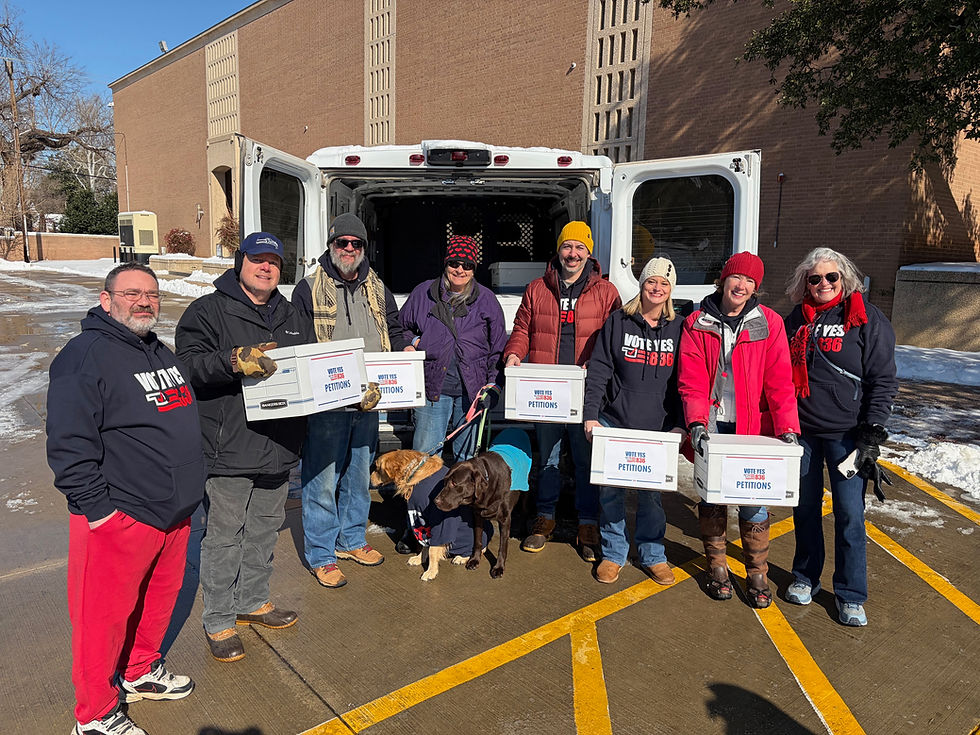
OKC mayor voices support for SQ 836 at signature drive
17 January 2026
By Josh Kelly, The Oklahoman
Oklahoma City has seen "dynamic success" through non-partisan municipal elections, says OKC Mayor David Holt, and now he feels it's time the state reflects that as well.
In the weeks leading up to OKC's mayoral election, Holt showed his support for State Question 836 by chatting with voters and even snapping some selfies with their pets at a signature drive event on Saturday, Jan. 17, at Belle Isle Library.
Holt, who is running for reelection on Feb. 10, has been a large proponent for the shift over the years.
"I would certainly encourage people to sign, even if they're not entirely sure, but they want to know more about it. Why not at least put it to a vote and let's have that conversation," Holt said.
What is state question 836 in Oklahoma?
SQ 836 seeks to open statewide and county primary elections in Oklahoma to all voters, regardless of political registration. The top-two vote-getters would move forward to the general election.
Advocates say the measure would allow more voters to become involved in the democratic process, because many races in deeply red Oklahoma are determined by Republican primary elections. But opponents argue open primary races would violate a party's right to choose its own candidates.
If the initiative petition collects 172,993 signatures, the proposed constitutional amendment will appear on the general election ballot in November.
The exact wording has not yet been determined. If the petition collects enough signatures and is verified, the attorney general will decide the exact wording.
How would SQ 386 change Oklahoma elections?
Under the proposal, all candidates in a state or county race would appear on a single primary ballot and voters would select one candidate for each office, with the two highest finishers in the primary advancing to a general election, even if they’re from the same party.
The state question would not affect presidential primaries.
Oklahoma currently has a “closed” primary system, where only registered members of a political party can vote in their party’s primary. Oklahoma’s Democratic Party has often allowed the state's 466,000 registered independent voters to participate in its primaries, but the Republican Party has not.
Holt said that the expanded access could improve Oklahoma's trailing voter turnout rate, as well as encourage candidates to focus their campaigns on broader issues that affect daily life.
Read more here.